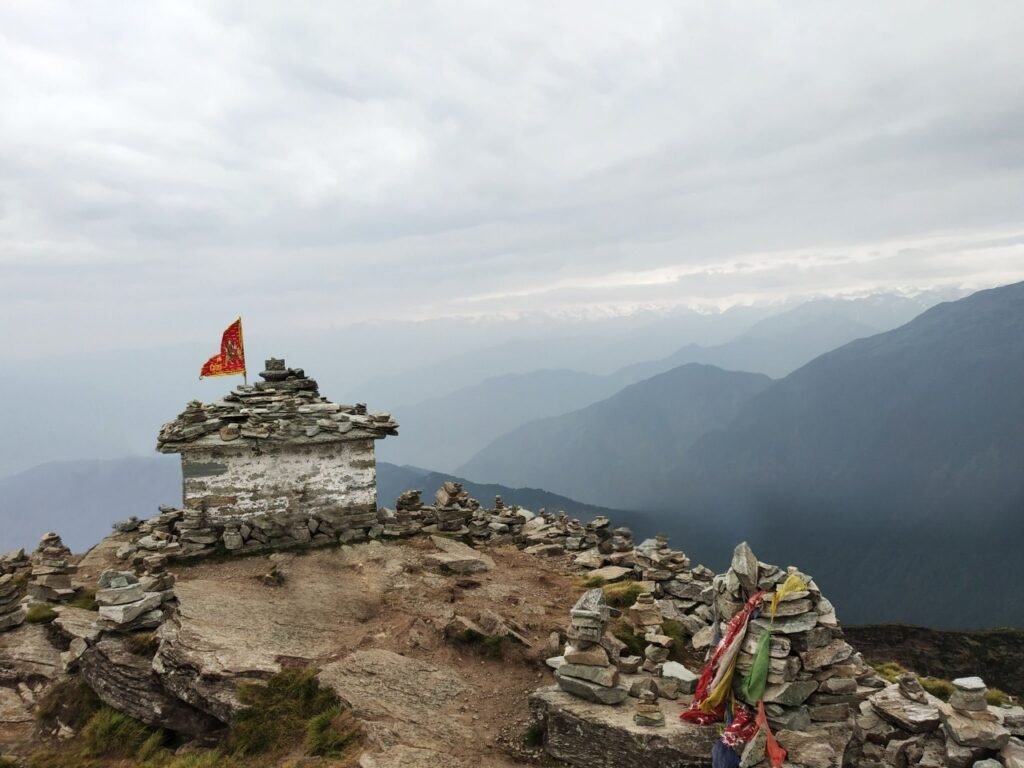

The Tungnath–Chandrashila trek is a classic Himalayan hike in Uttarakhand, India, famed for its spiritual and scenic value. This moderate trail, often called the Chopta Tungnath trek, leads adventurers through alpine meadows and forests up to the highest Shiva shrine in the world—the 3,680 m Tungnath Temple—and further to the Chandrashila summit at ~4,000 m. It is one of the five holy Panch Kedar temples dedicated to Lord Shiva. The trek offers panoramic views of the Garhwal Himalayas, lush rhododendron blooms in spring, and a rewarding sense of accomplishment. In this guide, we cover everything you need: location, route details, highlights, best seasons, sample itineraries, packing tips, accommodation, cultural context, and safety notes.
Location and Accessibility for the Tungnath Chandrashila Trek
The trek starts at Chopta, a small hamlet (altitude ~2,650–2,700 m) in the Rudraprayag district of Uttarakhand. Chopta lies about 162 km north of Rishikesh (6–7 hours by road) and ~450 km from Delhi. Nearest railhead is Haridwar (~212 km) and nearest airport is Jolly Grant (Dehradun). From Haridwar one follows Rishikesh–Devprayag–Rudraprayag, then turns left at Rudraprayag towards Kedarnath via Srinagar, Agastyamuni, Syal Sar, Kund, Ukhimath and Chandrapuri to reach Chopta (road distance ~225 km from Haridwar). The motorable road ends at Chopta; beyond this point you trek.
Chopta itself sits on the road between Gopeshwar and Guptkashi, making it relatively easy to reach by taxi or bus. In Uttarakhand, government (GMVN) and private buses run from Haridwar/Dehradun to Ukhimath; from Ukhimath shared jeeps or taxis ply the winding road up to Chopta. In winter months (Dec–Mar), heavy snow may cut off Chopta, but from April through November it’s accessible.
Tungnath Chandrashila Trek Details (Distance, Elevation, Difficulty)
-
- Trailhead: Chopta (~2,650 m)
-
- Chopta to Tungnath: ~4 km one-way, ~700–1000 m ascent (Tungnath Temple at 3,680 m). On good trails and paved stone steps, this takes ~2–3 hours for most trekkers.
-
- Tungnath to Chandrashila: ~1.5 km further, ~300–400 m ascent (summit at ~4,000 m). This steep section adds about 1 hour up (and slightly less down).
-
- Round-trip: About 11–12 km total (5.5 km up and down), typically done as an out-and-back hike or with overnight camping. Total active trekking time is roughly 4–6 hours depending on pace and breaks.
The path from Chopta to Tungnath is well-defined and mostly paved with stone steps or smooth trails. The climb is steady but not technically difficult, passing through dense forests of rhododendron and oak. Though steep in places, the Tungnath Chandrashila trek is considered easy-to-moderate and does not require technical gear or a guide in summer conditions. Beginners with reasonable fitness can complete it at a relaxed pace. Above 3,100 m, tree cover thins out and weather can be harsh—sunlight is strong by day and frigid after sunset. One should carry water and take the ascent slowly to acclimatize.
Highlights of the Chopta Tungnath Chandrashila Trek
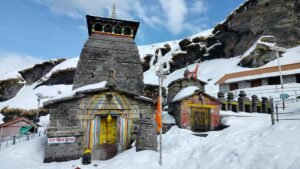
Tungnath Temple
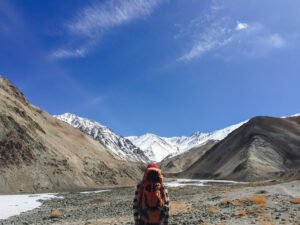
Tungnath Chandrashila Trek
-
- Tungnath Temple: The ancient stone Tungnath Temple itself is the highest Shiva shrine on earth. Perched at 3,680 m with colorful flags and carvings, it offers a spiritual pit-stop and an astonishing backdrop of snow peaks. (The temple is typically open April–November; in winter the deity is moved to lower-altitude Makkumath.)
-
- Chandrashila Summit: Just past Tungnath lies Chandrashila (“moon rock”) at ~4,000 m. The flat summit has a Shiva lingam shrine and yields 360° panoramic views of the Himalaya. Trekkers here can see giants like Nanda Devi, Chaukhamba, Trishul, and Kedarnath ranges lining the skyline. For many, witnessing sunrise from Chandrashila is the trek’s crown jewel – as first light sets the peaks aflame in gold.
-
- Himalayan Vistas: Throughout the climb, especially from open meadows, sweeping vistas unfold. On clear days you can spot 30–40 named peaks. For example, the early trekking segment near Chopta opens into verdant pastures (bugyals) where, framed by gnarled deodar trees, you see the distant snowy range. Later, from Chandrashila ridge you feel surrounded by the entire Garhwal range.
-
- Flora and Fauna: In spring (May–June) the trail is draped in rhododendron blooms. Bright pink clusters cover the forest floor and cliffs along the way. Native birds like the colorful Himalayan Monal may be sighted on the slopes. The meadows (bugyals) are lush green in summer and offer camping spots, dotted with wildflowers in clear weather.
Collectively, these elements—ancient temple, high-altitude meadowlands, snow peaks, and spiritual aura—make the Tungnath Chandrashila trek uniquely rewarding.
Best Time to Visit for the Tungnath Chandrashila Trek
The ideal season for the Chopta–Tungnath–Chandrashila trek is late spring through autumn. In practical terms, April to early November is best. During April–June (late spring/early summer) the weather is pleasant (5–18°C range), valley forests are lush, and rhododendrons bloom. The Tungnath Temple opens (usually end-April) for visitors after winter and views are generally clear. Autumn (September–October) is also excellent: post-monsoon skies clear up, bringing crisp air and superb visibility.
Monsoon (July–August) brings moderate rain and lush green scenery, but trails can be slippery and landslide-prone; the viewpoint may be clouded by mist. Hence, many trekkers avoid heavy-monsoon months. Winter (Dec–Feb) sees heavy snowfall: Chopta and trails are usually snowbound, the Tungnath temple closes (Shiva’s idol is moved to Makkumath), and the trek becomes technical. Only very experienced snow-trekkers attempt the Tungnath Chandrashila trek in deep winter. In short, plan for April–June or September–early November for the best combination of weather, views and access.
Suggested Itineraries
There are two common ways to tackle this trek, depending on your time and hiking preference: a 1-night/2-day trip or a more leisurely 2-night/3-day trip.
-
- 1N / 2D (Fast Trek):
-
- Day 1: Drive to Chopta (arrive by afternoon). Camp or stay overnight in Chopta. Then trek up (~2–3 hours) to Tungnath Temple in the late afternoon, enjoying dusk views, and descend to Chopta for the night.
-
- Day 2: Rise early and trek from Chopta past Tungnath to Chandrashila summit (another ~1–2 hours ascent beyond Tungnath). Watch the sunrise from the peak, then return down to Tungnath and further down to Chopta by mid-morning (4–6 hrs total descent), and depart. This option means carrying all day-gear in a single push, which is feasible for fit trekkers.
-
- 1N / 2D (Fast Trek):
-
- 2N / 3D (Relaxed Pace):
-
- Day 1: Arrive Chopta and begin trekking up to Tungnath (~2–3 hr), arriving by afternoon. Stay the night at or above Tungnath (there are basic guesthouses/dorms near the temple) if possible.
-
- Day 2: Early pre-dawn hike from your camp to Chandrashila to catch sunrise. After enjoying the summit panorama, trek down to Chopta for late afternoon. Camp or lodge in Chopta the second night.
-
- Day 3: Wake leisurely and depart Chopta to your onward destination. This allows extra rest, acclimatization, and a relaxed pace (especially useful if you plan to sleep at Tungnath).
-
- 2N / 3D (Relaxed Pace):
Day-by-day tips: In all itineraries, start hiking early (e.g. by 6–7 AM) to avoid afternoon clouds and ensure full daylight, as afternoon storms can roll in.
Packing Tips and Essential Gear for the Trek
Pack light but be prepared for alpine conditions on the Tungnath Chandrashila trek:
-
- Clothing: Layered clothing (quick-dry base layers, insulating fleece or down jacket, waterproof windbreaker). Even in summer nights can be cold (near freezing above 3,500 m). A warm hat and gloves are advised for pre-dawn summit hikes.
-
- Footwear: Sturdy trekking shoes or boots with good grip. The trail is rocky and can be slippery in wet/muddy sections or on melting snow in spring.
-
- Backpack: A daypack (~25–35L) for 2D, and a larger pack (50–60L) if camping or carrying extra gear for 3D. Include rain cover or dry bags (monsoon likelihood in June/Sept).
-
- Hydration & Snacks: Carry 2–3 liters of water (refill at Chopta or dhabas), and energy snacks (nuts, chocolate, energy bars).
-
- Sun & Misc: Sunglasses, sunhat, and sunscreen (high UV at altitude). Trekking poles (optional) help knee support. A headlamp or torch for pre-dawn walks. First-aid kit (include altitude sickness meds, painkillers, bandages). Emergency blanket can be handy.
-
- Permits/Docs: Carry ID, and any permits if required.
-
- Sleeping Gear (if camping): If camping, bring a 3-season sleeping bag (rated to -10°C or lower) and inflatable mat.
Remember, at ~4,000 m you may feel mild altitude effects. Take it slow on the ascent – “Slow and steady” pace helps acclimatize.
Accommodation Options on the Tungnath Trek
Chopta is a small but popular trek base with simple lodging. Options include:
-
- Tea Houses/Dhabas: Along the Chopta–Tungnath trail (around 45 min from Chopta) there are several stone dhabas. These serve food/tea and offer very basic dormitory beds (often ₹100–150/night).
-
- Guesthouses/Hotels: In Chopta village itself there are a handful of small hotels and lodges. Rates might range ₹500–1000/night. Nearby, about 3 km down the road at Bhulkan village, newer guesthouses have also opened.
-
- Camping/Tents: Many trekkers camp in Chopta or near Tungnath. In Chopta (and Duggalbitta 4–5 km below) there are commercial campsites and even GMVN tents.
- Tungnath Stay: Rustic lodging (guest dorms) is available near the Tungnath temple, charged very cheaply (100–200 Rs). Facilities are minimal (no running water, just shared floor mats).
Cultural and Spiritual Context
The Tungnath Temple (and the trek) carries deep spiritual significance. Tungnath is the third of the five Panch Kedar temples in Uttarakhand, all dedicated to Lord Shiva. According to legend, the Pandava brothers (of the Mahabharata) sought Shiva’s penance, and Shiva appeared in disguise as a bull. When caught, Shiva’s bull-form sank into the earth, re-emerging in parts across the Himalaya – Shiva’s arms surfaced at Tungnath (leading to its name, “Lord of the body”). The Pandavas then built temples at these five sites to atone for their sins.
Visiting Tungnath is often part of a journey of faith in the Garhwal Himalayas. Today many trekkers combine adventure with devotion: lighting a lamp at the temple, hearing the wind sing through temple bells, or simply soaking the divine calm at Chandrashila, where a Shiva lingam sits atop the peak.
Conclusion & Safety on the Tungnath Chandrashila Trek
The Tungnath Chandrashila trek is a relatively easy Himalayan trek with a rich mix of adventure, nature, and spirituality. Key takeaways: you’ll trek ~5–6 km one-way with ~1,000 m elevation gain; the highlight is the ancient Tungnath Temple and the 4,000m Chandrashila summit. Plan for 2–3 days and choose the season wisely (April–June or Sept–Oct).
Safety tips: Acclimatise by ascending gently and drinking plenty of water. Keep a steady pace, rest if dizzy or breathless, and descend at the first sign of severe altitude discomfort (headache, nausea). Be cautious of afternoon thunderstorms in summer (clouds often roll in post-noon). Always stick to the marked path; in deep snow or bad weather, local guides or porters can be lifesavers.
Embarking on the Tungnath Chandrashila trek rewards you with unparalleled mountain panoramas, the thrill of high-altitude hiking, and a touch of Himalayan spirituality. With proper preparation—good fitness, gear, and timing—this journey will be an unforgettable adventure.