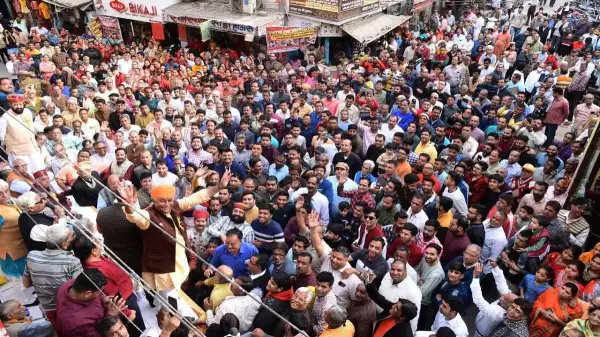

Pushkarna Sava is a remarkable community festival celebrated in Bikaner, Rajasthan. This event is not just a wedding ceremony but a celebration of the Pushkarna Brahmin community’s culture, tradition, and social unity.
What is Pushkarna Sava?
Pushkarna Sava is a mass wedding ceremony, where hundreds of couples get married on the same day at a single location. Its main purpose is to reduce the financial burden of weddings for individual families, as organizing separate weddings can be very expensive.
- Traditionally, the festival was held once every four years, but now it is often organized every two years to accommodate more participants.
- The dates are carefully selected based on astrological guidance to ensure the wedding rituals are performed at an auspicious time.
- Alongside the weddings, the festival also features cultural programs, folk music, and art exhibitions, showcasing Rajasthan’s rich heritage.
Special Recognition for Baarat: As mentioned earlier, the top 5 grooms whose Baarats arrive first are rewarded by the government, and local residents of Sehr often present gifts such as bikes, washing machines, fridges, cash, and other items to these grooms. This adds excitement and prestige to the festival.
Pushkarna Sava is a festival that symbolizes community unity, cultural preservation, and joyous celebration.
Pushkarna Sava Wedding Rituals
The wedding rituals of Pushkarna Sava are traditional, deeply symbolic, and conducted in a step-by-step sequence. Here’s a detailed guide:
1. Baat Badi
- The groom’s tika is removed, and Ganesh Pooja is performed at his home.
- From Baat Badi to Hathkam, songs and bhajans are sung at home, creating a festive atmosphere.
2. Tikki
- Tikki is performed in Brahma Muhurat (early dawn).
- Representatives from the bride’s house come to the groom’s home to formally begin the wedding rituals.
- This ritual marks the official acceptance of the alliance by both families.
3. Hathkam
- The bride’s home sends haldi (turmeric paste) to the groom, which is applied on him.
- This ritual symbolizes purity, blessings, and good fortune.
4. Chiki
- Chiki occurs one day before the wedding, involving a Ganesh Parikrama (circumambulation).
- First, the bride’s Chiki goes to the groom’s house for pooja.
- Then, the groom’s Chiki goes to the bride’s house.
- The ritual ensures that the path for the wedding procession (Baarat) is cleared and blessed.
5. Mayra
- Mayra comes from the bride’s maternal home (Nanihal).
- Gifts and blessings are exchanged, spreading joy and strengthening family bonds.
6. Khiroda
- This is the ritual of Kanya Daan (giving away the bride).
- It symbolizes the bride officially joining the groom’s family.
7. Anjal Pooja
- Conducted before the Baarat, 5–7 ladies from the groom’s home visit the bride’s home.
- They perform prayers for the couple’s well-being and happiness.
8. Baarat & Pokha
- After all preliminary rituals, the Baarat (wedding procession) departs from the groom’s home.
- Upon arrival at the bride’s home, the mother-in-law performs Pokha, using items like:
- Belan (rolling pin)
- Silver coin
- Payal (anklet)
- Belt
- Kajal
- Dori (thread)
- Each item symbolizes blessings, prosperity, and marital harmony.
9. Phere & Bari
- The Phere (seven sacred rounds around the fire) are performed at the wedding mandap.
- After the Phere, the Bari (wedding dress/garments) comes from the groom’s house.
- The bride wears it and leaves for her Sasural (in-laws’ house), marking the beginning of her new life.
Cultural Significance
Pushkarna Sava is more than just a mass wedding; it holds deep community and spiritual significance:
- It helps reduce financial burdens for families.
- It strengthens community unity and bonding.
- It preserves Rajasthan’s rich heritage and rituals.
- The festival creates a vibrant, colorful, and joyous atmosphere.
- The recognition and gifts for the first-arriving grooms encourage punctuality and community participation, reflecting generosity and communal celebration.
FAQs
What exactly is Pushkarna Sava?
Pushkarna Sava is a massive community wedding festival (Mass Wedding) primarily celebrated by the Pushkarna Brahmin community in Rajasthan. It involves hundreds of couples getting married simultaneously at a single venue on a single day.
Why is this mass wedding organized?
The primary goal is social welfare and financial relief. By organizing weddings collectively, individual families save significantly on the high costs of venue, catering, and logistics, making it easier for every family to celebrate without a heavy financial burden.
How often does Pushkarna Sava take place?
Historically, the festival was held once every four years. However, due to the increasing number of participants and the needs of the community, it is now frequently organized every two years.
What makes the arrival of the 'Baarat' unique here?
Pushkarna Sava features a unique tradition where punctuality is rewarded. The top 5 grooms whose wedding processions (Baarats) arrive first at the venue receive special recognition and gifts such as bikes, washing machines, refrigerators, and cash from the government and local residents.
What are the key rituals like 'Khiroda' and 'Pokha'?
-
Khiroda: This represents the sacred ritual of Kanya Daan, where the bride is officially handed over to the groom’s family.
-
Pokha: This is a welcoming ritual performed by the mother-in-law. She uses symbolic items like a rolling pin (Belan), silver coins, and Kajal to bless the groom upon his arrival.